
Miami County Arrest Report Archive
Miami County publishes no official multi-day, weekly, or 72-hour jail blotter. The best dated source is the Peru Indiana Today Arrests section. Its archive holds staff reports built around date ranges, including one spanning March 27 through March 29, 2020. Remember, this is a newspaper archive. It is not a Sheriff feed. Old posts prove nothing about a current schedule.
A multi-day report has real limits. It can skip arrests entirely. It often leans on agency releases and may run days after booking. A missing name means nothing. For who is in custody right now, turn to the jail or VINE. For what happened to a case afterward, turn to the court.
Read Miami County Arrest Reports
Start with the date range and the source line. A headline date may mark publication, not the arrest itself. Track each agency named, then confirm details with the office that created the record.
- Open the local Arrests category and identify its stated date span.
- Record the name, arrest date, agency, and charge wording without treating it as guilt.
- Contact the named police agency for its incident or arrest report.
- Contact the Sheriff for a county jail intake or custody record.
- Use MyCase for a public court file and final orders.
For same-day results, use Arrests Last 24 Hours instead of waiting on news. That path starts with the jail, since Miami County offers no verified same-day web roster.
Miami Blotter Entry Fields
Historical reports may name agencies, charges, warrants, and covered dates. Still, no uniform field set exists. A jail file holds more detail. A court file tracks the case after charging. Treat every news field as a lead.
| Reported field | How to read it |
|---|---|
| Name | Confirm identity with another detail. |
| Date range | The publisher’s span, not a custody period. |
| Agency | The likely custodian of the incident report. |
| Charges | Accusations subject to amendment or dismissal. |
| Warrant reference | Context, not present warrant confirmation. |
| Photograph | No consistent news or county policy was verified. |
| Bond | A reported term that may change by court order. |
An official booking file can hold intake time, a booking number, release or transfer data, fingerprints, and a photograph when one was taken and can be released. Miami County exposes none of that through a searchable roster.
Miami Weekend Posting Gaps
That 2020 example groups Friday through Sunday. Older clusters from parts of 2019 show daily or near-daily posting. So a broad date search is smart. Just do not assume a weekend surge, a holiday delay, or a Monday habit from these samples. No official cadence exists.
Arrest volume and publication volume are two different things. A newsroom might run several entries after one agency release, while routine bookings never earn a story. If a weekend record matters, ask the agency directly for your dates. Headlines are a poor proxy for activity. The official Sheriff page is the current contact baseline.
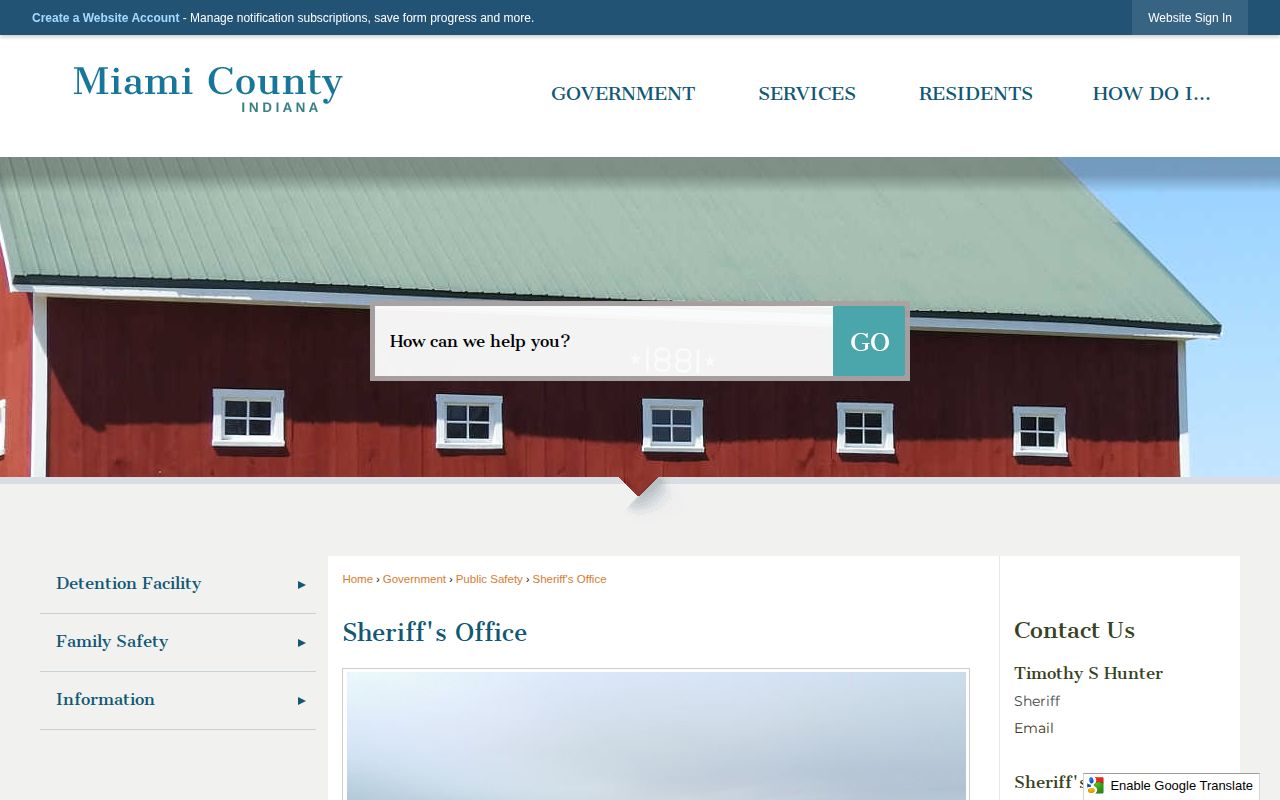
The capture shows the official route that takes priority over a delayed news entry.
Miami Arrest Record Retention
How far back a news archive reaches is not the same as legal retention. Indiana sets its own schedules. The Public Safety Agencies schedule keeps an adult inmate custody file for ten years after incarceration ends, and arrestee fingerprints stay on file permanently. Routine incident reports and logs run five years past entry. Daily bulletins last just one year.
The IARA retention schedules page lays out the approved process, though none of this makes every file public or online, since APRA exceptions, court orders, sealing, and expungement still apply.
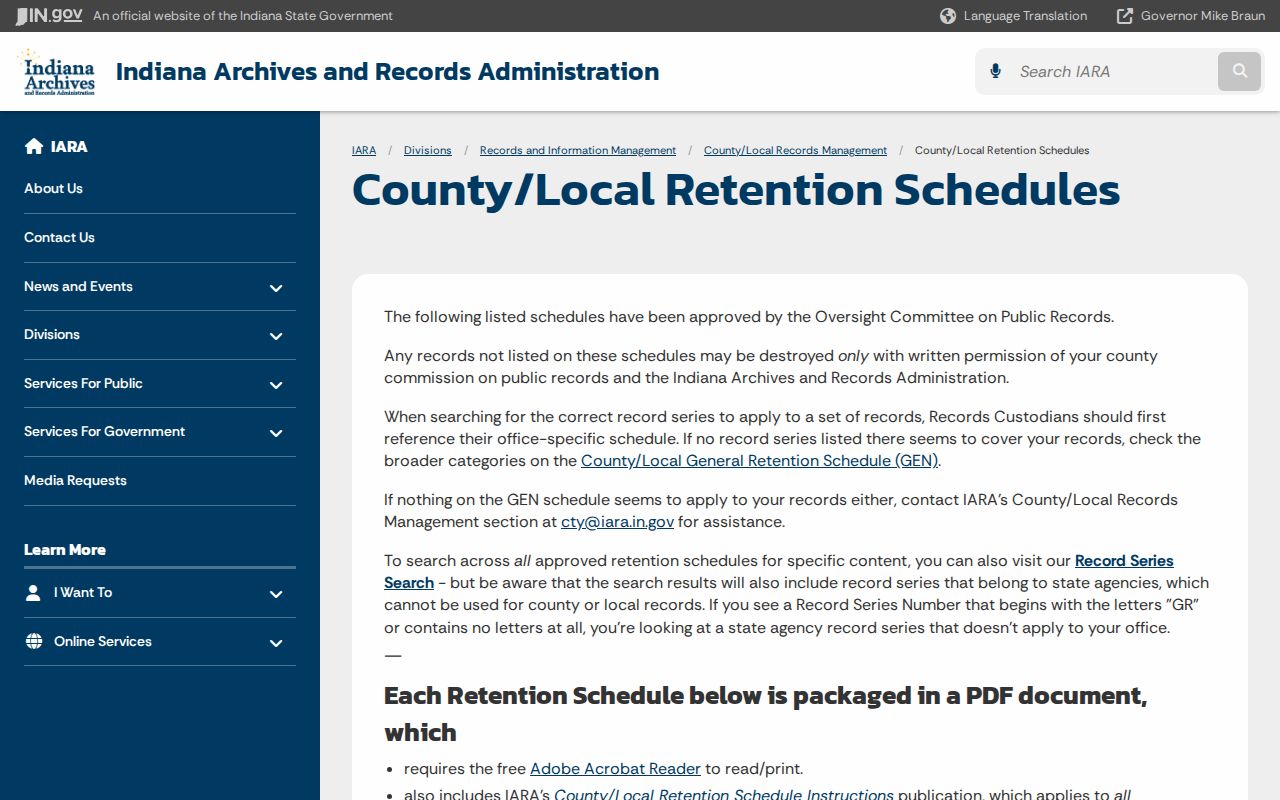
Once news coverage fades, the official schedule is how you identify the record series you need. Request old local records from the Sheriff or the arresting agency first. Ask which series applies. Ask whether the record stayed with that custodian. State Archives is not a current-jail substitute. Transfer happens only under an approved schedule.
A strong request names the full legal name, any known aliases, the narrowest workable date range, the arresting agency, and the exact record type. Want the booking file? Ask the Sheriff when the person entered county custody. Want the incident report? Ask Peru Police or whichever department made the arrest. The files relate, but one office may not hold the other's record. Add a cause number or booking number if you have it, since staff use those to tell events apart.
For a public court case, search Indiana MyCase or call the Miami County Clerk. MyCase can omit confidential, sealed, expunged, or older material. It is not the official court record. A missing online case proves nothing about whether an arrest happened. The clerk can explain how to request a public document, though clerk staff cannot give legal advice.
Note: Retention never guarantees public access, online display, or newspaper availability.
Regional Miami Arrest Coverage
WBIW covers selected Miami County arrests along with stories from multiagency operations. Its Operation Upper Hand story spanned several agencies. That is event-driven journalism. It is not a full list of jail admissions.
Your News Local posts selected arrest and court stories too. Peru Indiana Today runs the deepest historical category. Regional reports add agency attribution and hearing context, but none forms a county-complete archive.
Busted Newspaper keeps a Miami County page with older entries, as the older Busted Newspaper archive shows. Mugshots.com lists a county category, yet its local page loads unreliably. RecentlyBooked omits Miami County from its Indiana list. Arrests.org shows no confirmed local roster, and these third-party pages cannot establish who is in custody.
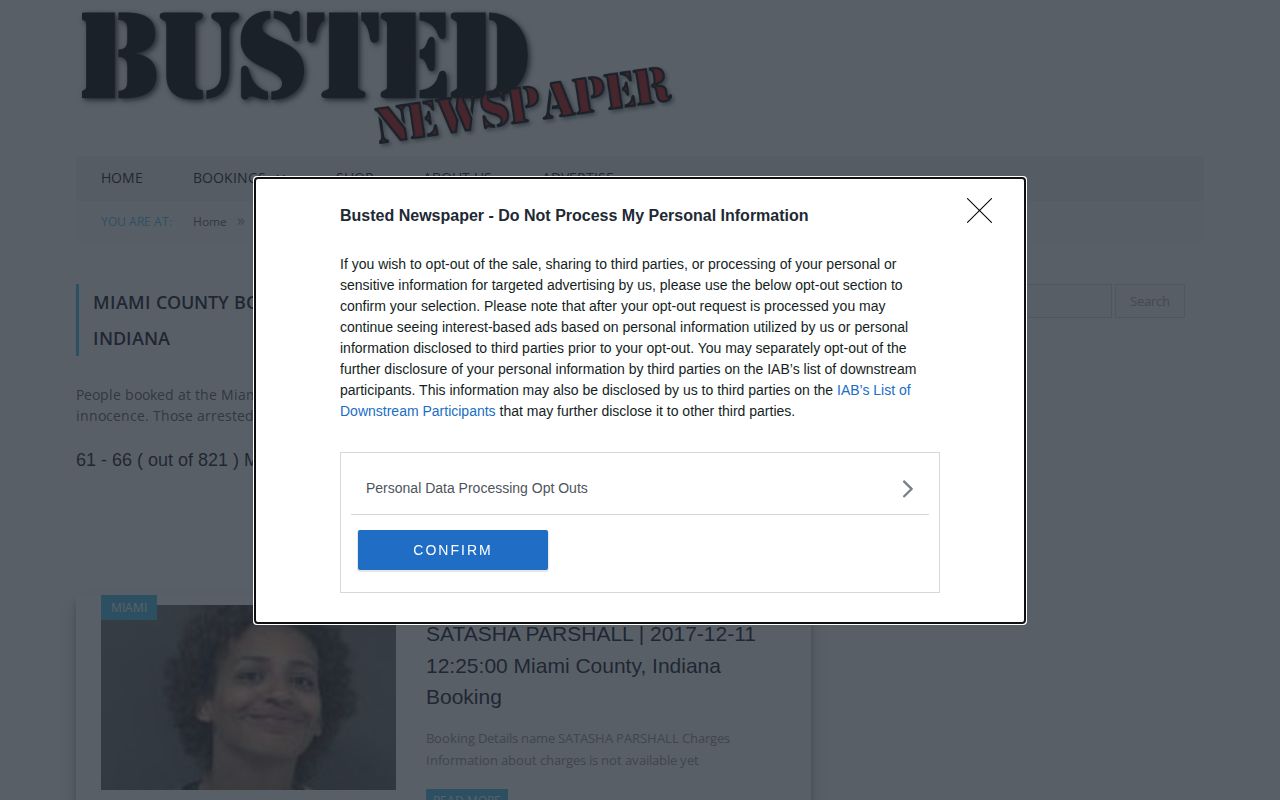
Each outlet answers a different question. A dated arrest report preserves what an agency announced that day. A later court story may show that charges changed or a hearing occurred. Neither is the official jail custody file. Neither guarantees coverage of Peru, Converse, Bunker Hill, or unincorporated Miami County. Before requesting a record, confirm which agency holds it, because city police and the Sheriff can each hold part of the same event.
Miami County, Ohio causes real confusion. Mugshots.zone results once surfaced an Ohio county page instead of the Indiana one. Check the state, agency, city, and facility every time. Peru should mean Peru, Indiana. The county jail should be the Miami County Detention Facility in Indiana. A matching county name alone proves nothing.
Reported charges point toward the court record. MyCase searches by party, county, cause number, or citation for public, nonconfidential matters. Its own help material warns that the online display is not the official court record, and older cases or documents may be missing. Sealed and expunged matters can vanish too. Contact the clerk for any public document that is not linked.
Multiagency operations demand special care. One story may name defendants tied to several jurisdictions, agencies, or facilities. It should never become a Miami County jail census. Confirm whether each person was booked locally, held elsewhere, cited and released, or transferred. The arresting agency can explain its incident record. The Sheriff handles county custody questions. The court provides disposition.
Photographs need the same scrutiny. Miami County's official site posts no public roster or online mugshot policy. A news or third-party image may be copied from an older source. It can linger long after release or a charge change. If the image matters, ask the Sheriff whether a booking photograph exists and is releasable under APRA. The custodian, not a news archive, decides the response and any redaction.