
Following Miami County Recent Arrests
The Miami County Sheriff's Office runs the Miami County Detention Facility, and every county booking record starts there. Its sheriff page, detention page, quick links, directory, and county sitemap list no public inmate search, recent-booking endpoint, or official blotter. That silence matters more than it looks. Plenty of commercial pages claim to be updated today. None of them is a county source, and a quiet web page proves nothing about who was booked.
Two time windows call for two methods. The Arrests Last 24 Hours guide handles same-day confirmation. The Police Blotter page covers older multi-day reports and archives. Neither one pretends Miami County has a live feed.
| Window | Verified Miami County source | Best next step |
|---|---|---|
| Same day | No official 24-hour web list located | Call the jail and allow for intake or release |
| Several days | No official county blotter located | Check official contacts, then dated news reports as secondary context |
| Current custody | Indiana SAVIN/VINELink, subject to live participation and lag | Search the live service and verify urgent results with the jail |
| Case outcome | Indiana MyCase and the Miami County Clerk | Match the person and cause number, then obtain the official court file |
Arrested Last Night in Miami County
A fresh Miami County arrest moves through stages before any stable record exists. First the arresting officer takes custody. Jail staff then confirm identity, log property, enter charges or holds, and classify the person. Release on bond can happen fast. Another agency might hold the person instead. The county promises no fixed window for a booking to appear anywhere online.
For an urgent check, call the Administrative Office/Jail at 765-472-1322. Central Dispatch lists 765-473-5474 as a non-emergency line and can route calls. True emergencies belong at 911. The county directory separately lists 765-473-6398 for Sheriff Jail. The numbers conflict. Start with the sheriff page's 765-472-1322 and ask staff to confirm the right line. The VINELink Custody Check tracks one person after intake. A blank or delayed result still needs jail confirmation. For the facility itself, the official Miami County Detention Facility page is the clearest county source, even without a public roster.
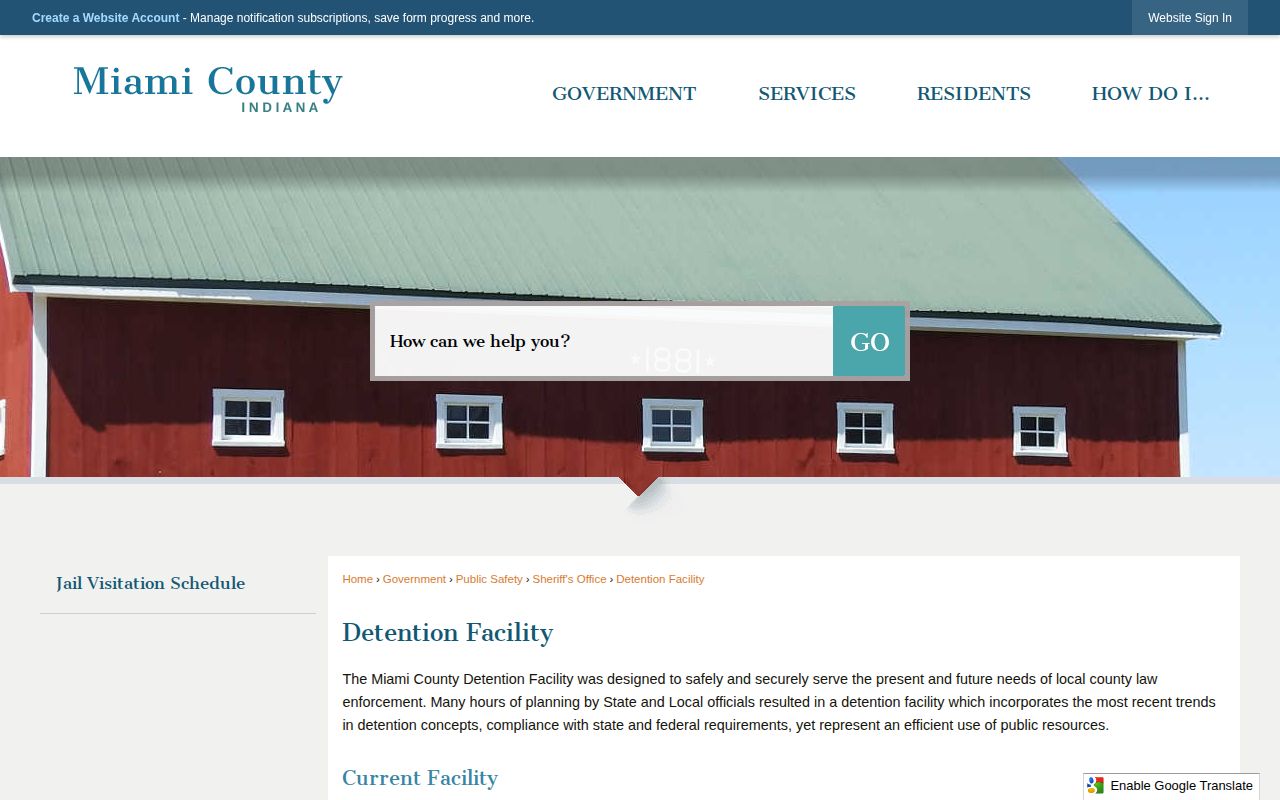
The detention facility page lays out the jail's services and contact route. It makes no claim to a live list of people in custody.
Miami County Jail Roster Reality
The Miami County Detention Facility publishes no verified public roster. No official search fields exist to describe. There is no refresh schedule, photo rule, or roll-off policy either. Indiana law lets the sheriff photograph and fingerprint anyone taken into custody. Taking an intake photo is not the same as posting it online. In practice, the roster is a direct inquiry to the jail. If needed, back that inquiry with a focused Indiana Access to Public Records Act request.
| Detail to provide | Why it helps the jail locate the record |
|---|---|
| Full legal name and aliases | Reduces mistaken matches and spelling problems |
| Date of birth or age | Separates people who share a name |
| Approximate arrest or booking date | Narrows the intake period |
| Arresting agency | Connects the jail entry to a Peru, town, sheriff, or state-police report |
| Booking or cause number | Links the custody transaction or later court case |
Work the phone methodically. Give jail staff exact identifying details. Ask whether the person is in county custody now. Ask whether the person was released, transferred, or never booked there at all. For ongoing updates, use Indiana SAVIN/VINELink. That works if the live service returns a Miami County match. Ask in writing for the intake or release record when you need a past booking. The sheriff offers no official jail app. County News Flash, Sheriff's Department, and Alert Center subscriptions exist. The county does not call them booking alerts.
Where Miami County Arrests Get Published
Every source answers a different question. The jail holds custody and booking material. The courts show what happened after filing. IDOC covers sentenced state custody. News outlets and reposting sites can offer clues, but they pick and choose, grow stale, and confirm neither current custody nor an outcome.
| Channel | Photo status | Authority | Use |
|---|---|---|---|
| Miami County Sheriff | Request; no online policy verified | Official county custodian | Current jail contact and focused record request |
| Indiana SAVIN | Not a photo archive | Official state service | Test current status and notifications |
| Indiana MyCase | Not a jail mugshot source | Official court access | Public case events, orders, and disposition |
| Peru Indiana Today | No consistent photo rule verified | News, not government | Historical date-range arrest reports |
| Busted Newspaper | May repost source images | Unofficial commercial publisher | Secondary lead only; verify every claim officially |
The official IDOC Offender Locator searches state prison, not Miami County arrests.
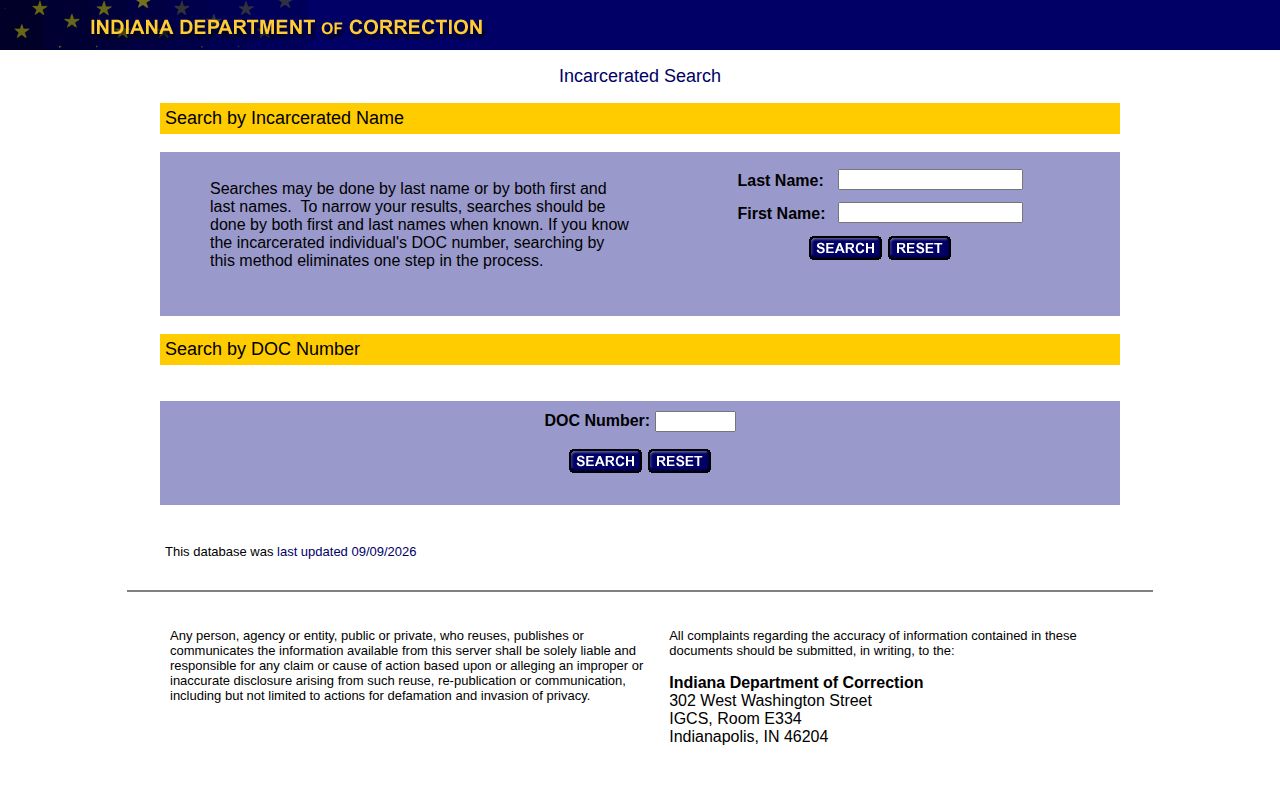
The locator screen shows the state custody channel at work. It does not display county booking photos.
Miami County Booking Timing and Capacity
The current Miami County Detention Facility opened in 2010 with a stated capacity of 244. Capacity describes the building, not the head count today. It implies nothing about a public roster. Intake work often begins before any record is ready for release. Staff may still be confirming identity, weighing holds, or logging property. That can still be true when a family member first calls.
Keep the sheriff's power to photograph separate from the county's choice to publish. A booking image can exist for identification and never reach a web page. Miami County posts no schedule and no public photo policy. The honest answer to when a mugshot will appear is a two-step one. Ask the jail whether the intake photo exists. Then use APRA to request a defined copy.
Arrest Alerts and Local News Limits
Miami County sends updates through general Sheriff's Department, News Flash, and Alert Center subscriptions. None of those work as new-booking alerts. The Sheriff's office also lists no jail app. An app-store listing or a commercial inmate app can look official without any county sponsorship. Wait for the county itself to link a tool and explain what it covers.
Local news fills part of the gap. Peru Indiana Today keeps a historical arrests category with reports that span several dates. Those reports name agencies and charges. WBIW and Your News Local also run selected Miami County enforcement and court stories. News is context, though. A story can follow a press release, skip routine arrests, or lag the booking itself, so confirm any court outcome through MyCase.
Recent Arrests by Miami County City
Peru, Converse, and Bunker Hill are Miami County's three largest incorporated places. The 2020 estimates base sets that ranking. City arrests and county bookings are different records. A city police department keeps the incident report. When an arrest ends in county custody, the Miami County Detention Facility holds the booking record.
- Peru Recent Arrests explains the Peru Police Department route, county booking, and city records contact.
- Converse Recent Arrests documents the lack of a verified town blotter and the county fallback.
- Bunker Hill Recent Arrests uses the official town department page and county custody path.
The Sheriff and Indiana State Police can also make arrests inside city limits. Identify the arresting agency before requesting any incident report.
Inside a Miami County Arrest Record
A booking file can hold more than any public summary shows. Miami County promises no full disclosure online. Ask for the exact record you need. The arrest report sits with the arresting agency, the booking and custody file with the jail, and the court file follows the prosecution.
| Field | What it can show |
|---|---|
| Name, aliases, birth date | Identity information used to distinguish people |
| Booking number and time | The jail transaction and intake timestamp |
| Arrest date, location, agency | When, where, and by whom custody began |
| Charges as booked | Initial charges, which may later change or be dismissed |
| Bond and holds | Initial release conditions, detainers, or judge-set terms |
| Photograph and fingerprints | Identification material created during intake |
| Release or transfer data | How county custody ended or changed |
| Court or cause number | The bridge to MyCase and the clerk’s official file |
Miami County Mugshots and Arrest Photos
Indiana law lets a sheriff photograph, fingerprint, and collect identifying data from anyone taken into custody on a felony or misdemeanor. That power exists for intake identification. Miami County publishes no official roster or photo-display policy. A photo may still sit in the jail file. It just never appears on the county website.
Ask the Miami County Sheriff for a specific booking photograph under APRA. Include the full name, the approximate booking date, the arresting agency, and a booking number if known. The custodian can redact or withhold material under a statutory exception, investigatory discretion, a court order, or a confidentiality rule. The county posts no booking-photo fee schedule. Confirm the cost first. Never assume the image is free.
Commercial mugshot pages copy photos and details from elsewhere. Their entries can be old, incomplete, or tied to the wrong person. Some stay online after a legal change. Skip any unverified service that promises to alter an official record for a fee. For state custody after sentencing, the IDOC locator and Offender Records unit are the right channels. The county booking path does not cover them.
Request a Miami County Arrest Record
Miami County has no dedicated booking-record form. A narrow written request still works under Indiana APRA. Call the Sheriff at 765-472-1322 first to confirm the current records custodian and delivery method, since county pages list conflicting jail numbers.
- Identify the person by full legal name and aliases, with date of birth if known.
- Give the approximate arrest or booking date and name the arresting agency.
- Specify each item, such as the intake record, booking photograph, release record, bond record, or incident report.
- Send the request to the correct custodian. The Sheriff’s address is 1104 W 200 N, Peru, IN 46970.
- Ask for an estimate of copy charges and request the legal basis for any denial or redaction.
- Use the Public Access Counselor’s guidance if an APRA response issue cannot be resolved with the agency.
PAC guidance requires a response to phone or in-person requests within 24 hours. A response is not the record itself. It may just acknowledge the request. Production comes within a reasonable time. APRA never forces staff to write a new report, answer a research question, or ignore a lawful exemption.
Indiana Law, Expungement, and Retention
Indiana Code 5-14-3 governs public-record requests. A government record stays open under APRA unless a listed exception or discretionary withholding provision applies. The law creates no Miami County mugshot website. The Public Access Counselor's warrant and mugshot guidance adds nuance. An image can count as a public record. Yet it may remain withheld under a valid investigatory exception.
Indiana Code 35-38-9 controls expungement and sealing. Eligibility turns on the record and current law. A petition goes to the court of jurisdiction. The Indiana State Police handles processing once a court grants relief. A missing MyCase result has many explanations: confidentiality, sealing, expungement, an older record, or a simple search mismatch. It does not prove an arrest never occurred.
The IARA public-safety schedule separates online visibility from agency retention. Adult inmate custody files are kept ten years after incarceration ends under PSA 17-39. Arrestee fingerprints are permanent. Daily bulletins last one year, routine logs five, and some criminal case records run longer or forever depending on classification. Ask the Sheriff first about old jail records. The official IARA retention page shows why a record's age and its web availability are separate questions, and State Archives collections hold transferred state records, not a Miami County jail-photo archive.
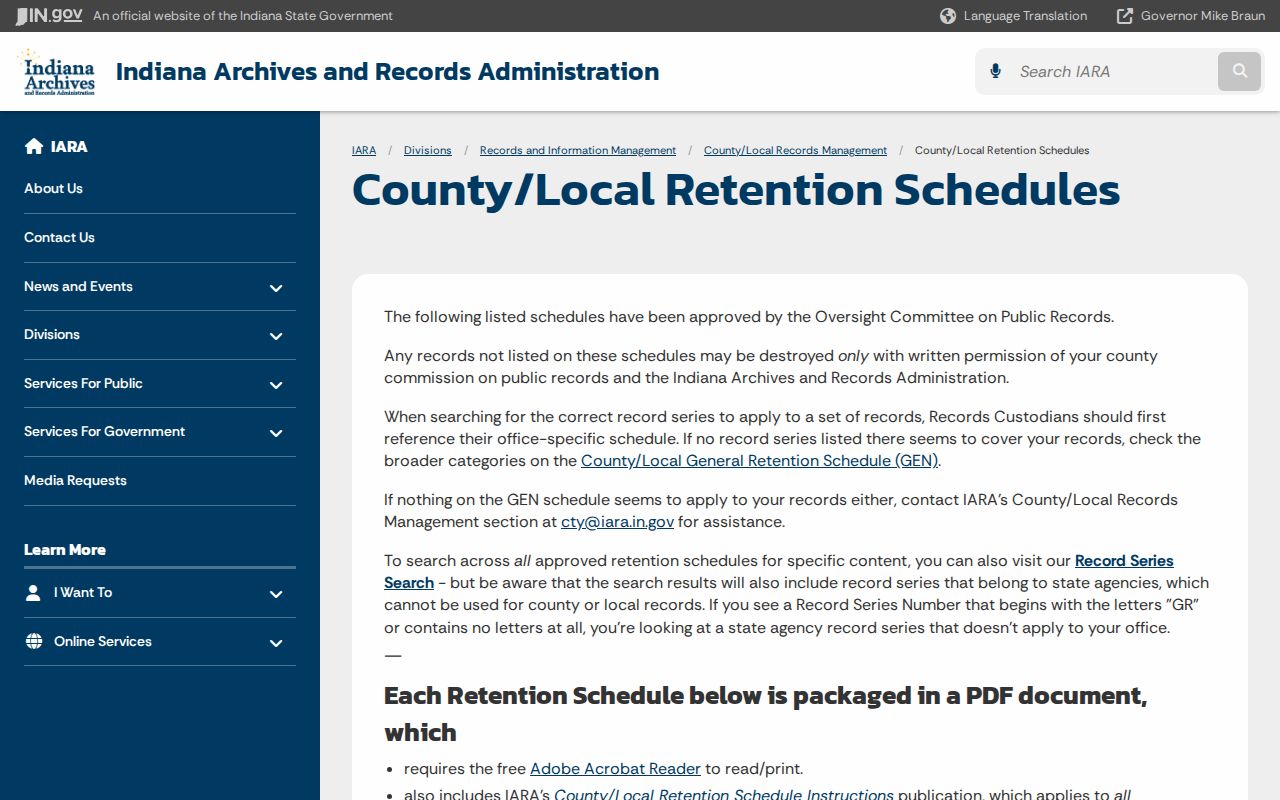
Note: The approved schedule system governs how long agencies keep records, not whether an old booking stays searchable online.
Miami County Warrants and Wanted Status
Miami County handles warrant questions through a named contact. The county directory lists Heather Craig for warrants, protective orders, and registry matters. She is reached at 765-472-1322, extension 4414. The sheriff's office publishes no online warrant-search portal and no most-wanted gallery. So confirmation always runs through a person rather than a webpage.
Two checks work best. MyCase lets anyone search public, nonconfidential case information. That covers a cause number, a filing, a hearing, or failure-to-appear context. From there, ask the warrants contact or the court whether a Miami County warrant is active, recalled, or satisfied. Keep in mind that MyCase is not a live warrant database. Sealed or confidential material stays out of view.
The official Sheriff directory posts the named warrants contact for confirmation.
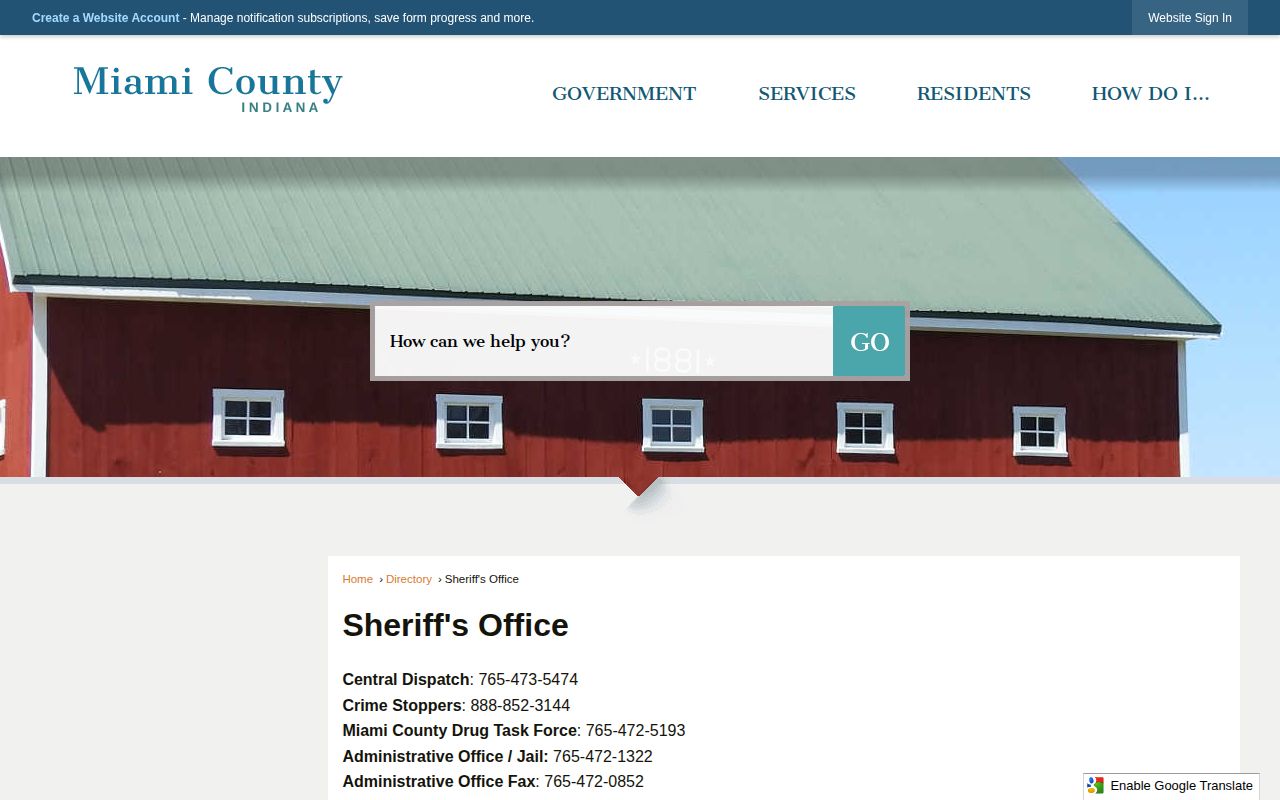
The directory is a contact route, not a wanted-person gallery. Never confront someone over a warrant entry; call 911 if danger is immediate.
After a Miami County Arrest
A booking entry is only the start of the paper trail. The Miami County Clerk of Courts directs the public to MyCase for nonconfidential case information. That includes events and some final orders. Search with a carefully matched name. Add the cause number when you have it. If a public document is not linked, ask the Clerk at 25 N Broadway, Room 208, in Peru. The jail record never tells the whole court story. MyCase itself warns that it is not the official court record.
Local rules publish a bond schedule by offense level and recognize certain release categories. Still, a judge can set different terms, and holds can change the result. Bond-out timing is not a disposition. Charges may be amended, reduced, dismissed, resolved by plea, or tried. Traffic matters and felonies arising at Miami Correctional Facility follow local Superior I filing rules. That is a reminder that a county name does not point to just one custody system or court path.
Which record controls? Use the booking file for intake and release facts. Use the incident report for the arresting agency's account. Use the court file for the legal outcome.
Indiana MyCase provides the official public search starting point for nonconfidential case information.
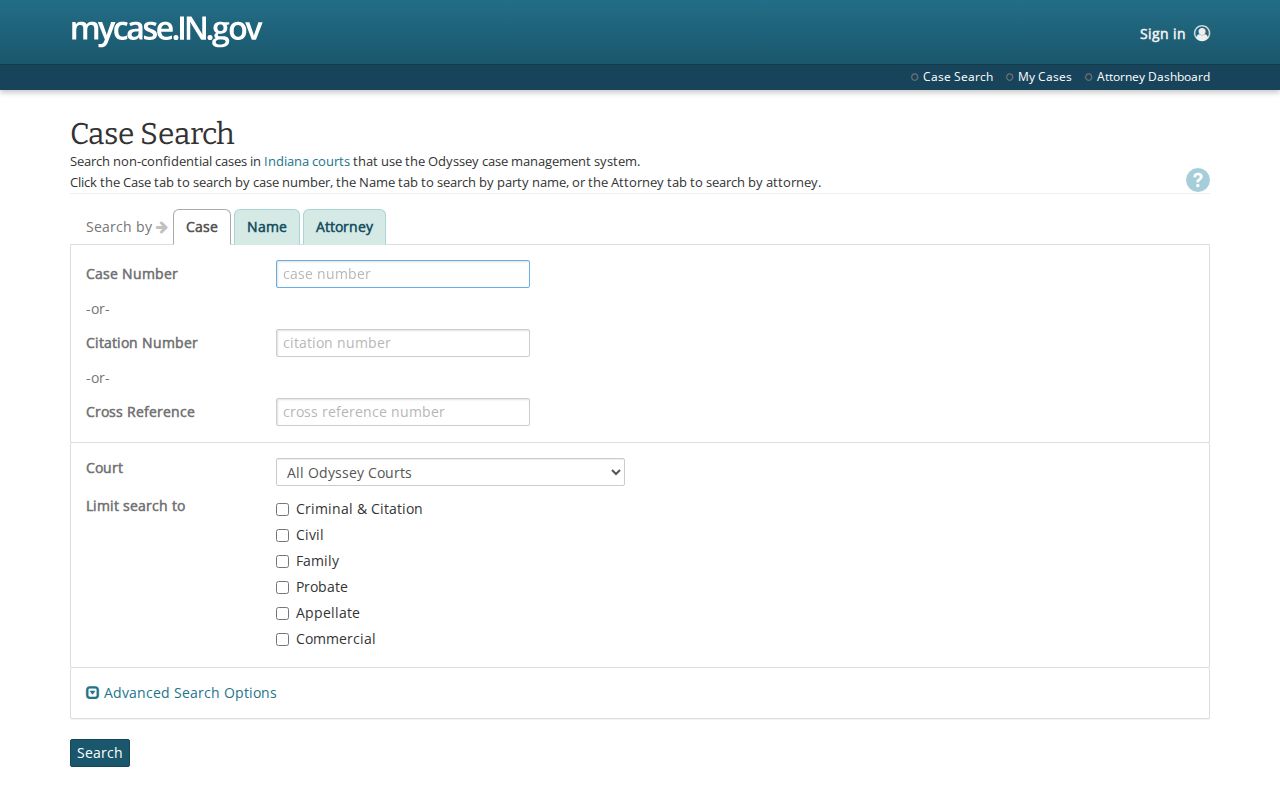
The empty search screen lets readers learn the court tool before searching. No real person's data appears in it.
State Prison and Federal Custody
The Indiana Department of Correction Offender Locator covers sentenced state custody. Search it by name or DOC number. It is not the Miami County jail roster. Miami Correctional Facility is an IDOC prison that sits inside the county. A listing tied to that institution reflects a state-prison record, not a fresh county booking. For records beyond the locator, IDOC Offender Records requires its authorization form. It accepts requests by mail or email.
The federal side works differently. The Bureau of Prisons locator covers federal inmates from 1982 forward. Its public fields lean toward status, and it is not a mugshot gallery. Someone held pretrial by the U.S. Marshals, or parked temporarily in a local jail, may not yet show as a committed BOP inmate. ICE runs a separate detainee locator. It needs an A-number plus country of birth or other biographical details. It bars searches for anyone under 18. It can also lag or omit a person for safety or agency reasons.
Never blend these systems. A blank IDOC, BOP, or ICE result proves nothing about release or a local arrest. Identify the custodian first. Then use that agency's own locator or records process. For booking-photo access, return to the Miami County mugshots section and its county and state distinctions.
Miami County Sheriff’s Office Location and Directions
Search Public Records
Sponsored Results